Amazon FBA vs MLM Infrastructure: Who Really Pays for Logistics and Certification

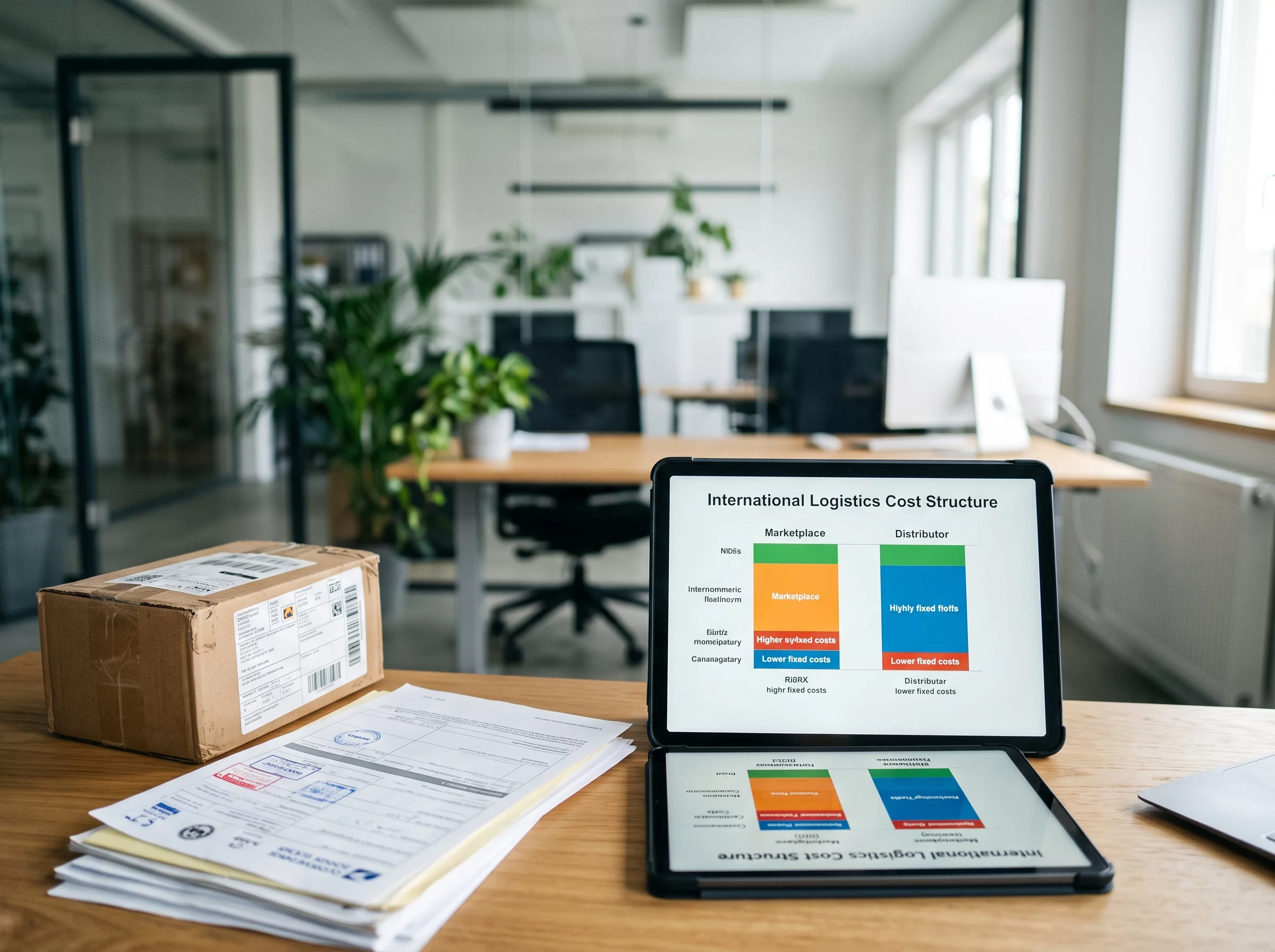
The Anatomy of Operating Costs
Scaling through marketplaces promises access to millions of buyers, but hides a harsh financial reality. Sellers give platforms up to 40% of the retail price for basic fulfillment services.
While a classic D2C brand freezes capital in cross-border logistics, network business distributors use a ready-made infrastructure with zero storage costs. The difference in unit economics determines the survival rate of the business.
Certification and Time-to-market
The speed of entering a new market directly depends on bureaucratic barriers. In classic product business, the legalization process eats up a critical resource of time.
- Time-to-market: for a classic seller takes 6 to 8 months due to the need for local certification of each product matrix.
- Cross-border: requires the brand owner to independently pass customs clearance and pay import duties.
Launching sales on a new continent is always a cash gap. You pay for production, sea freight, duties, and warehousing six months before the first client transaction.
In the partnership model of global MLM companies, these processes are centralized. The corporation takes on the legalization of the product in dozens of presence countries, reducing the launch time for a partner to a single click when sending a referral link.
Logistics Economics: Seller vs Distributor
For an objective assessment of the infrastructure load, let's analyze the cost structure for a starting turnover of 10,000 dollars.
Delegating processes changes the entrepreneur's focus. Here are the operational cycles the corporation takes over in a network business:
- International logistics and customs clearance of batches.
- Organizing the work of warehouse hubs and targeted delivery to clients.
- Processing returns, handling complaints, and disposing of defects.
- Accepting payments in local currencies in compliance with fiscal norms.
Infrastructure Risks of the Partnership Model
Total delegation of logistics has its price. The MLM business model deprives the partner of control over pricing and the assortment matrix. You cannot quickly lower the price to dump leftovers or introduce a trending product into circulation.
You also need time to build up a client base. The absence of your own warehouses means your income entirely depends on the smooth operation of corporate supplies. If the company's logistics hub fails, the partner loses profit without the ability to cover the deficit with a third-party contractor.
Victory in international markets goes to those who minimize operating leverage. Moving away from heavy logistics in favor of pure marketing allows you to scale net profit, not warehouse stock.